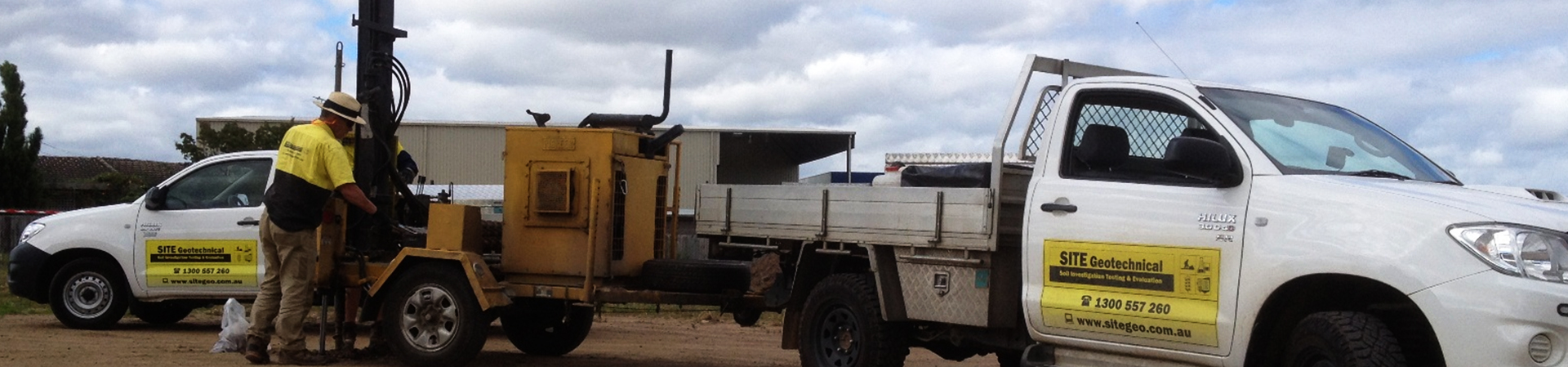

Not every geotechnical investigation we conduct has the luxury of wide open spaces and plenty of clearance for our equipment. Basement car parks, underground service sites and tight urban blocks all present a different challenge. These tight spaces also raise a different question altogether: not just what the soil conditions are, but whether equipment can physically get in there to test them.
Low-height access drilling solves this problem. By using compact, low-clearance rigs specifically designed for restricted environments, our geotechnical drilling team can work in spaces that would ordinarily rule out standard drilling equipment. We can do this without compromising the quality or accuracy of the data collected.
This article looks at what low-height access drilling involves, when it’s required and how the right equipment and thorough planning come together for impressive results. Plus, we’ll share an example of our team at work in a basement car park where the SITE Geotechnical team supported monitoring well installation works using a compact low-height drill rig. Despite low ceilings, structural columns and active site operations, we managed a good result.
Often called limited-access drilling or low-headroom drilling, low-height access drilling is a specialised technique that uses compact, segmented or remote-powered machinery to drill, sample or pile in cramped spaces. It is designed for places where standard, large truck-mounted drills simply can’t operate.
This kind of tight access drilling is used in indoors or underground locations such as tunnels or basements; under obstructions like bridges or power lines; or narrow access locations like residential yards or suburban alleyways. You would also use this technique in environmentally sensitive areas where bringing in big equipment may be detrimental to trees and other wildlife.
Low-height access drilling relies on purpose-built equipment rather than a scaled-down version of standard machinery. SITE Geotechnical’s GD02 Mini Crawler Rig is designed specifically for sites where tight or narrow access, minimal ground pressure, or overhead height restrictions rule out a conventional drilling rig.
The rig’s compact dimensions mean it can operate in spaces a standard rig can’t, while still delivering the drilling capability needed for a proper geotechnical or environmental investigation. It’s rubber-tracked for manoeuvrability and minimal ground disturbance, weighs in at approximately 1.3 tonnes, and can be craned into position where even compact access routes aren’t available.
This makes it well suited to a wide range of constrained environments: basement car parks, sites with low overhead power lines or cables, areas close to existing structures, sloping sites, and locations where only a couple of metres of headroom is available. As outlined on our Mini Rig for Tight Access page, the same rig is equally suited to environmentally sensitive sites near waterways or protected flora and fauna, where minimising ground disturbance matters just as much as access.
For the basement car park project below, this combination of compact size and genuine drilling capability was the difference between completing the works on schedule and the job not being possible at all.

Installing monitoring wells in built-up urban environments often calls for more than standard drilling capability. Access limitations, low ceiling heights, active site operations, and confined work areas can all create challenges that demand careful planning and the right equipment for the job.
At The Glen Shopping Centre, SITE Geotechnical supported Matrix Drilling with monitoring well installation works within a restricted-access basement car park. The site presented a combination of constraints, including low-clearance, structural columns, loading dock access routes, ongoing vehicle movements, and the need to work around active shopping centre operations.
To meet these challenges, SITE Geotechnical deployed its compact low-height drill rig, purpose-suited to restricted-access and height-constrained environments. With a mast-down height of approximately 1.80 metres and a mast-up operating height of up to approximately 2.54 metres, the rig was able to manoeuvre and operate within the basement car park where standard rigs simply wouldn’t fit.can’t
The project is a clear example of why equipment selection matters on constrained sites. In environments like this, successful delivery comes down to more than drilling capability alone, it also requires careful planning, access management, and the ability to adapt the works to the physical limitations of the site.
You can check out the Reel on Instagram of our team working in a restricted space at The Glen shopping centre car park.
Not every site allows for a standard drill rig, and trying to force one into a space it wasn’t built for can lead to delays, access damage, or an investigation that simply can’t proceed. Basement car parks, underground service areas, and sites with existing structures all present their own combination of height, width, and manoeuvrability constraints that need to be assessed before any equipment reaches site.
Choosing the right rig isn’t just about whether it fits. It’s about whether it can still deliver the drilling depth, sampling quality, and monitoring well installation standards the project requires, even within a reduced footprint. A compact rig that compromises on these outcomes doesn’t solve the access problem, it just creates a different one further down the track.This is exactly where SITE Geotechnical’s Mini Rig for Tight Access earns its place: built to handle restricted environments without compromising on the quality of the investigation itself, it can drill down to a depth of 15 meters.

This is why equipment selection works best as part of the broader planning process, not as an afterthought once a site has already proven difficult to access. Site constraints, structural elements, vehicle movements, and ongoing operations all need to be factored in alongside the geotechnical scope itself, so the right rig, access route, and methodology are locked in before drilling begins.
At SITE Geotechnical, this is where experience on genuinely difficult sites pays off. Knowing which equipment suits which constraint, and how to adapt a methodology around an active, restricted, or low-clearance environment, is what separates a smooth investigation from a stalled one.
Restricted access, low clearance, and constrained sites don’t have to rule out a thorough geotechnical investigation. With the right equipment and the experience to match, even the most difficult basement car parks can be investigated properly, without compromising on the quality of the data or the timeline of the project.
If your next project involves restricted access, low-clearance conditions, or any site where standard drilling equipment simply won’t fit, the team at SITE Geotechnical can help. As a trusted provider of geotechnical services in Melbourne and across Victoria you can contact us to discuss your site and find out how our Mini Rig for Tight Access can get your investigation done right, or call 1300 557 260 for a prompt response.
A successful building project starts with the soil foundation. Learn why conducting a geotechnical survey before construction is crucial for stability and efficiency.
You may not think much about the pavement beneath your feet, but a great deal of planning and preparation goes into the design, creation and laying of pavement. Pavement design in particular needs a lot of careful thought, as it is used in critical infrastructure projects such as the building of major highways, warehouses, large […]
Have you noticed cracks in the walls or ceiling of a building? Are your doors or windows no longer closing easily? Small cracks are no cause for alarm, but larger ones are the signs of a distressed building, and the underlying cause needs to be looked into straight away. A distressed building will need more […]
Having the right or wrong pavement design can make millions of dollars difference in a project. That’s why it’s so important to do your pavement design correctly the first time around, and this includes choosing the right team of pavement engineers for the job. Pavement design is about more than footpaths–it actually influences all kinds […]
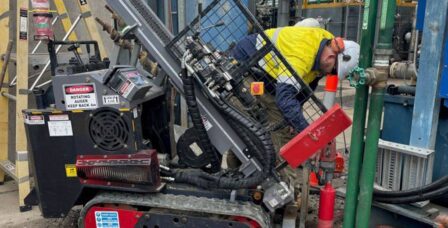
Geotechnical site investigations often involve the use of a drilling rig in a wide and open space, but what if the areas you are trying to work on have size or access constraints? In these circumstances, you’ll need access to geotechnical drilling technologies that can work for both small and large-scale infrastructure projects. This is […]
At Site Geotechnical, we understand that wetlands play an essential role in land development projects across the country. While most of our clients are already familiar with their environmental benefits, such as flood mitigation and water quality improvement, our focus is on the geotechnical considerations that can help wetlands perform reliably and sustainably. Let’s discover […]
In the midst of planning a construction project? Whether you’re building a road, a bridge, a commerce centre, or a dam, the earth you’ll be working with can have a profound impact on the success of your project. Geotechnical services consist of many different types of studies and tests on a particular site that delve […]
When you think of recycling, your mind might immediately go to paper or cans, but did you know recycled construction and waste materials play a strong part in pavement design in Melbourne as well? Pavement is everywhere, from our sidewalks and personal driveways to roads, construction platforms and rail trails. Expanding cities are constantly creating […]
For two decades, SITE Geotechnical Pty Ltd has been at the forefront of geotechnical engineering, providing expert investigations and recommendations that ensure strong, lasting foundations for infrastructure and development projects. Our journey from a small consulting firm to a leading geotechnical service provider in Victoria has been defined by innovation, expertise, and an unwavering commitment […]
In the world of infrastructure, maintaining and upgrading pavements is a constant challenge. Victorian roads endure heavy traffic, harsh weather, and can simply wear down over time, often leading to deterioration that demands action. Historically, a full reconstruction—ripping out old pavement and starting fresh—has been the go-to solution. But there’s a smarter, more sustainable alternative: […]
 1300 557 260