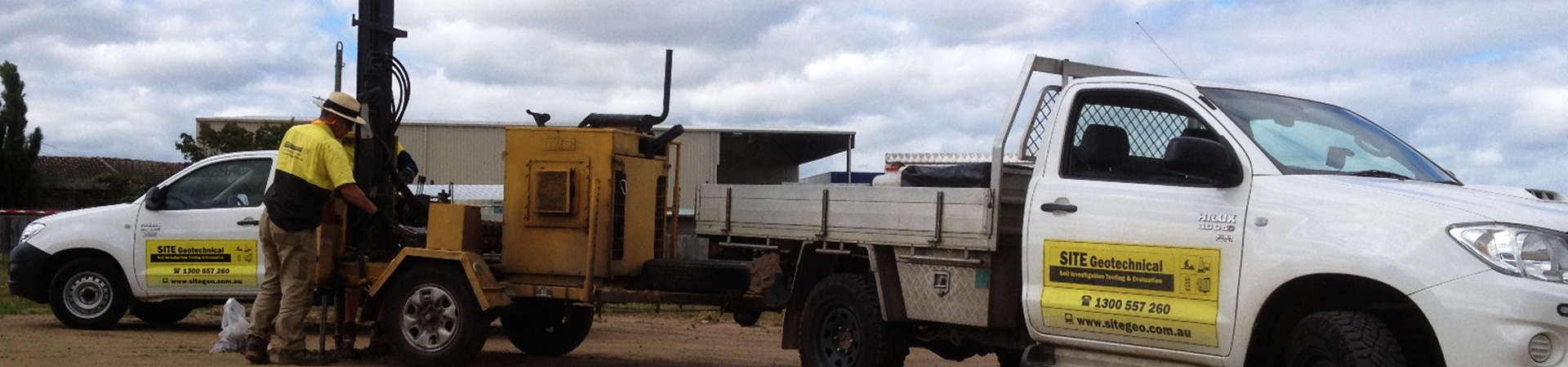
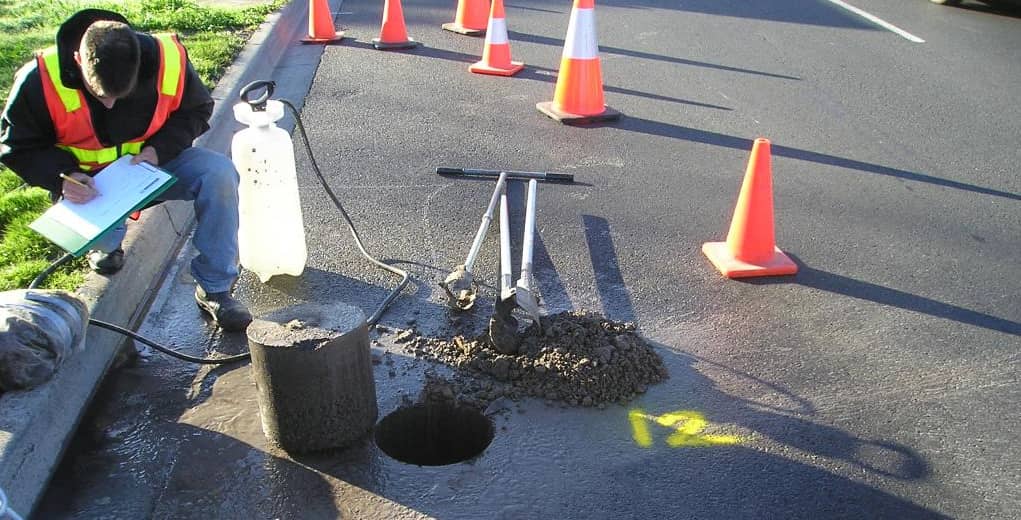
Salvaging and repurposing of existing materials sometimes through stabilisation can have significant environmental impacts and save natural resources. In most cases re-use leads to a reduction in construction time (reduction in removal and replacement), construction movements, reduction in the cost to build. In order to consider reuse or stabilisation of existing materials, testing of the materials is the first step. Should the existing material meet certain criteria they will be more suited to re-use once this is established further pavement design and testing can be reviewed in order to come up with an economical comparison to conventional reconstruction or other potential treatments.
SITE Geotechnical are your pavement inspection, material testing and pavement design experts in Melbourne and throughout Victoria. We know how important it is to test the pavement materials and the subgrade soils that support them in order to provide an appropriate pavement upgrade that will last the test of time. Pavements are typically designed to last 20 years and if designed and built appropriately will go the distance and beyond. If done really well the road should only require minor maintenance and at the end of 20 years require only minor upgrading..
Throughout this article, we’re going to explain what material testing is and why it is so important in civil engineering projects.
Material testing and pavement investigation is the process of examining and analysing all the physical and mechanical properties of construction materials, such as concrete, steel reinforcement, crushed rock, stabilised pavement materials and asphalt. It is also a process of analysing the soil on which construction will take place to ensure the right methods of foundation are used, which keeps structures solid for longer periods of time.
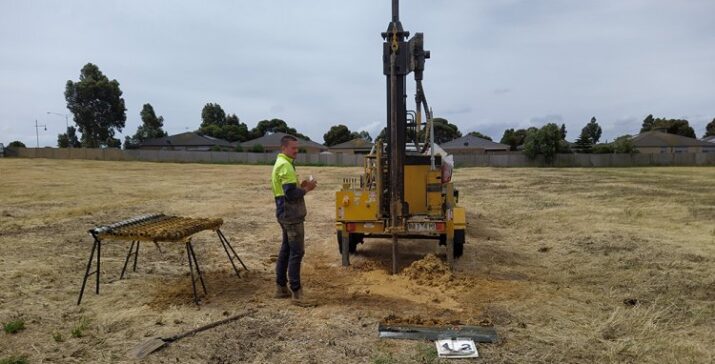
We do this through field testing on site, and by taking samples back to our laboratory for testing. Here, we’re assessing and checking materials for strength and suitability, so that contractors, authorities and engineers know the best way to move forward when it comes to design and construction. You want to limit unexpected latent conditions during construction and have sufficient detail to enable the right decisions to be made from the outset.
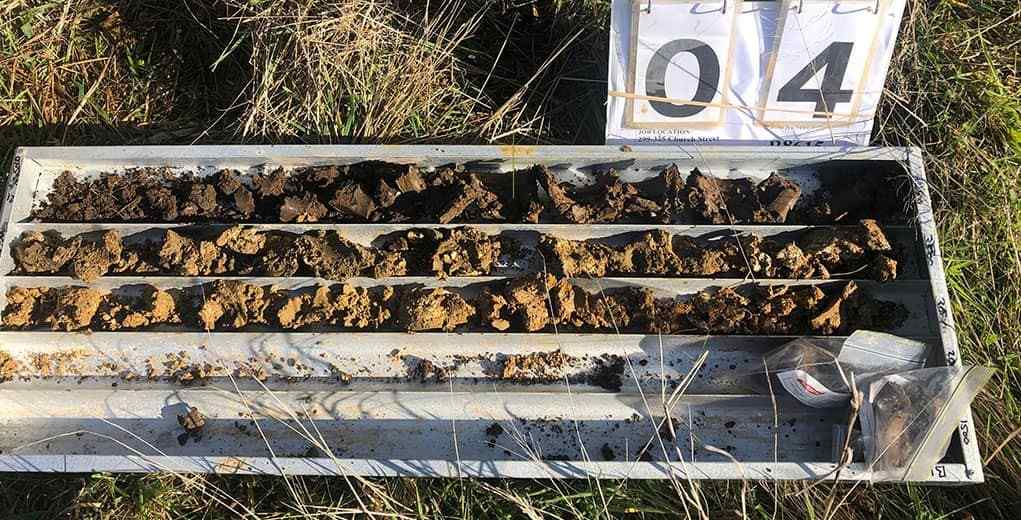
Arguably the two most important reasons for testing materials before construction begins is to gain an understanding of what the material comprises and how it compares to quality standards. For example does the existing crushed rock within an existing pavement meet the current quality requirements of that for a Class 3 Fine Crushed Rock (FCR) or does it meet the quality requirements for stabilisation. In the case of the subgrade clays what is the Soaked Strength. For example Soaked CBR is a common test undertaken to determine the strength and reactivity of soils for the purpose of pavement design..
Material testing helps ensure that the materials being used can handle the loads being applied to it. Testing also helps with durability, to make sure the materials will last their intended lifespan, to resist loads applied by heavy traffic.
Gaining a good understanding of the existing pavement conditions upfront assists in determining the pavements needs. For example a pavement with significant defects is more likely going to require full reconstruction whereas a pavement with limited defects may be suitable for minor improvements or if considering higher levels of robustness consider stabilisation of the in situ material to increase the materials strength and subsequent pavement life. Testing upfront, before major work has begun, prevents costly repairs in the future.
Quality control through testing is also vital. You don’t want to be using substandard materials, or determine that the compaction applied during construction was insufficient as these factors will cause the pavement to deteriorate faster than the design intention, leaving you with early repairs and maintenance .
Testing the materials and undertaking quality assurance activities will help prevent critical failures in many ways.
Soil testing can determine the density and moisture content where foundations or pavement materials will be laid. This helps determine the ratio for subgrade material to be compacted to prevent uneven settling which can crack foundations and warp buildings.
Tests such as Rapid Hilt Compaction, California Bearing Ratio, Density Testing evaluate the strength and compaction of the soil so determine its strength and level of compaction which can be compared to the specification or validate design assumptions.
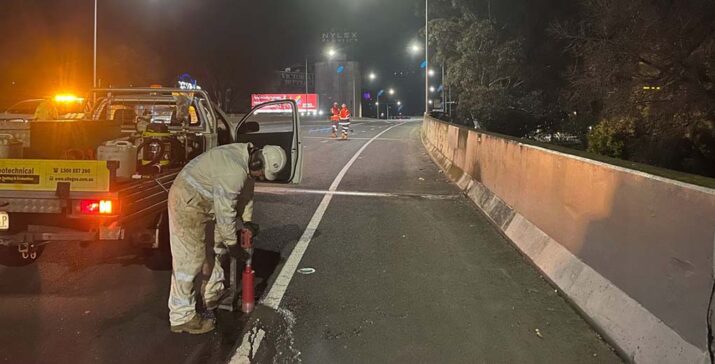
Field tests that we do, for example density checks on the subgrade soils, crushed rock or stabilised materials or field testing like test rolling (sometimes referred to as proof rolling), can ensure that the project specifications are met.
Through testing we can catch substandard materials early. This helps prevent costly repairs or premature reconstruction or later defects resulting from materials being outside of specification requirements.
With Sieve Analysis we can look at the particle sizes of samples. This test allows us to grade the aggregate and can assist in assessing the materials qualities.
Further testing we can do in the laboratory, includes Atterberg Limits testing. This shows us the limits of your soil or crushed rock for properties such as:
Through these tests, engineers can predict how soil will react with changes in moisture to assist with reactivity assessment and in terms of crushed rock compare the values to well established quality specifications. This provides an understanding of the materials characteristics.
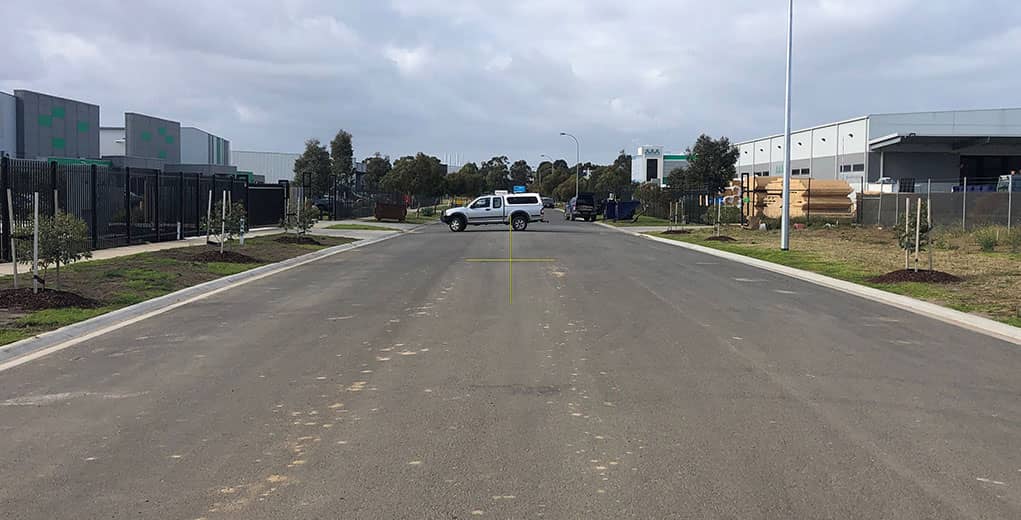
This article has been discussing how our material testing services can prevent permanent structural damage, but what happens if you don’t conduct material testing before you start your project?
Not conducting appropriate material testing could lead to using substandard materials, having materials that don’t meet quality standards or materials that have not been adequately compacted to meet specification requirements all of which will lead to premature failure of the pavement if quality standards are not met.
The lifespan of your project could be significantly reduced, or your maintenance costs will be significantly higher without material testing.
For roads and pavement, lack of testing can lead to ongoing pothole issues or pavement failure prior to the design life being achieved in some cases within just a few years of project completion.
All of the above can inevitably lead to financial hardship and legal liabilities. Trying to fix any damage and failures after construction is far more expensive than preventative tests before you begin. But any damage after the project is complete can expose companies and contractors to lawsuits and litigations or embarrassment for road authorities that will be exposed to public ridicule. This can lead to a loss of reputation and work, which leads to even more financial pressure.
If you’re planning a big civil engineering project, a construction or some roadworks, it makes sense to employ the services of SITE Geotechnical. Through our highly skilled and experienced team, we can do onsite testing and laboratory testing of soils and construction materials, and make sure you’re on firm ground and laying a solid pavement that will last decades.
Q: What are Atterberg Limits and why are they important?
Atterberg Limits describe the consistency of fine-grained soils by measuring Moisture Content (MC), Liquid Limit (LL), Plastic Limit (PL), Plasticity Index (PI), and Linear Shrinkage (LS). They help engineers understand how soil and construction materials like crushed rock behaves under varying moisture conditions.
Q: What is a California Bearing Ratio (CBR) test and when do I need one?
A CBR test measures the strength of a soil or pavement material. It’s commonly required for pavement design to determine how well the subgrade or base material will support loads from traffic.
Q: What is Sieve Analysis and what does it tell me about my material?
Sieve Analysis (SA) grades a soil or aggregate sample by particle size distribution. It helps classify the material and assess its suitability for construction use, such as road base or fill.
Q: Is SITE Geotechnical’s laboratory NATA accredited?
Yes. SITE Geotechnical holds NATA (National Association of Testing Authorities) accreditation in Construction Materials Testing, ensuring lab results meet recognised Australian standards.
Q: What soil parameters can be derived from material testing for structural design?
Laboratory testing can provide key parameters for the design of pavements.
Q: How are material test results used in pavement design?
Test results such as CBR values, MDD/OMC data, and sieve analysis are directly used to design pavement layers, specifying thicknesses, material types, and compaction requirements for everything from footpaths to highways.
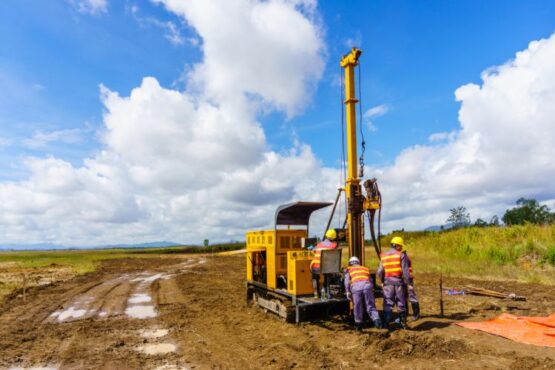
A successful building project starts with the soil foundation. Learn why conducting a geotechnical survey before construction is crucial for stability and efficiency.
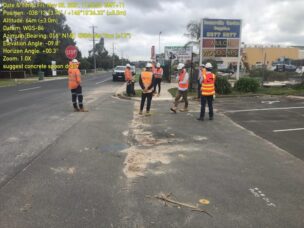
You may not think much about the pavement beneath your feet, but a great deal of planning and preparation goes into the design, creation and laying of pavement. Pavement design in particular needs a lot of careful thought, as it is used in critical infrastructure projects such as the building of major highways, warehouses, large […]

Have you noticed cracks in the walls or ceiling of a building? Are your doors or windows no longer closing easily? Small cracks are no cause for alarm, but larger ones are the signs of a distressed building, and the underlying cause needs to be looked into straight away. A distressed building will need more […]
Having the right or wrong pavement design can make millions of dollars difference in a project. That’s why it’s so important to do your pavement design correctly the first time around, and this includes choosing the right team of pavement engineers for the job. Pavement design is about more than footpaths–it actually influences all kinds […]
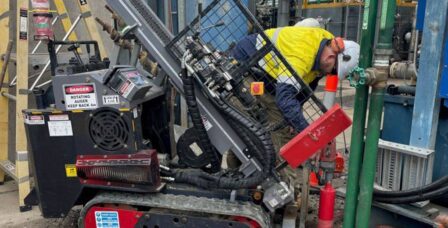
Geotechnical site investigations often involve the use of a drilling rig in a wide and open space, but what if the areas you are trying to work on have size or access constraints? In these circumstances, you’ll need access to geotechnical drilling technologies that can work for both small and large-scale infrastructure projects. This is […]

At Site Geotechnical, we understand that wetlands play an essential role in land development projects across the country. While most of our clients are already familiar with their environmental benefits, such as flood mitigation and water quality improvement, our focus is on the geotechnical considerations that can help wetlands perform reliably and sustainably. Let’s discover […]
In the midst of planning a construction project? Whether you’re building a road, a bridge, a commerce centre, or a dam, the earth you’ll be working with can have a profound impact on the success of your project. Geotechnical services consist of many different types of studies and tests on a particular site that delve […]
When you think of recycling, your mind might immediately go to paper or cans, but did you know recycled construction and waste materials play a strong part in pavement design in Melbourne as well? Pavement is everywhere, from our sidewalks and personal driveways to roads, construction platforms and rail trails. Expanding cities are constantly creating […]

For two decades, SITE Geotechnical Pty Ltd has been at the forefront of geotechnical engineering, providing expert investigations and recommendations that ensure strong, lasting foundations for infrastructure and development projects. Our journey from a small consulting firm to a leading geotechnical service provider in Victoria has been defined by innovation, expertise, and an unwavering commitment […]
In the world of infrastructure, maintaining and upgrading pavements is a constant challenge. Victorian roads endure heavy traffic, harsh weather, and can simply wear down over time, often leading to deterioration that demands action. Historically, a full reconstruction—ripping out old pavement and starting fresh—has been the go-to solution. But there’s a smarter, more sustainable alternative: […]
 1300 557 260